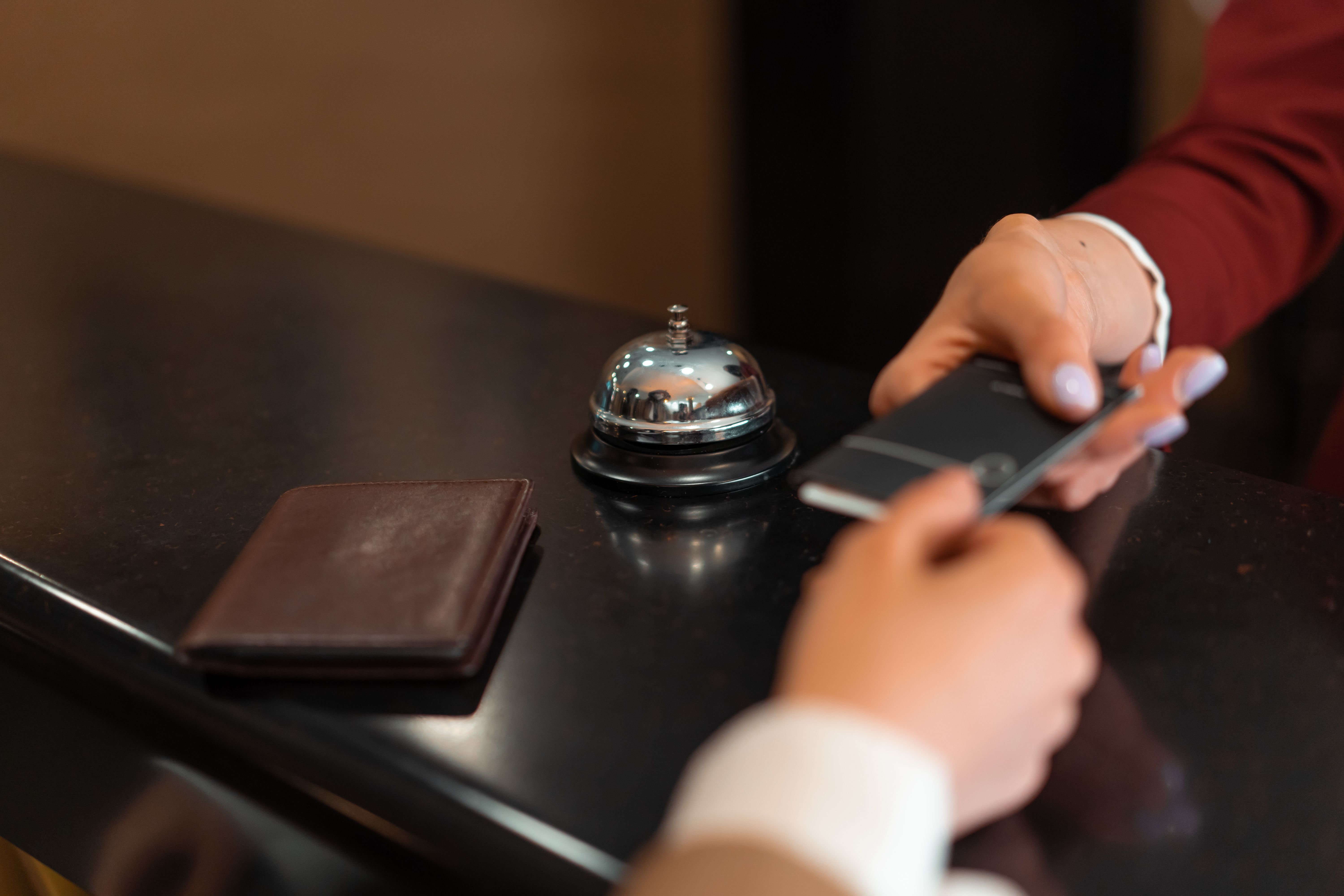
There are certain things guests should never have to think about: where to find breakfast, how to order dinner, or whether the front desk is the right place to call about a spa appointment, an extra towel, or the fact that the air-conditioning has decided, at two in the morning, to develop a personality of its own.
A hotel, at its best, spares its guests this kind of administrative thinking. You arrive with a suitcase and, for a few days at least, someone else has arranged the details. Or, ideally, the details arrange themselves.
This is one of the quieter arts of hospitality—and a useful place to begin when considering how to improve the guest experience. A genuinely good stay can seem almost suspiciously simple: you check in, find what you need, and things happen roughly when and where you expect them to.
Behind that ease, of course, is another story entirely—a network of departments, requests, schedules, kitchens, housekeeping teams, and countless small acts of coordination. The trick is not merely making all of it work. It is making sure the guest never has to witness the machinery.

Hotel Guest Experience Is Often Shaped by Small Details
Luxury has traditionally been an exercise in addition. A larger room. Better sheets. More attentive service. Another amenity, should one be required. But convenience has become its own form of luxury.
Consider the minor indignities of an otherwise pleasant hotel stay. You want to see the room service menu, but there is no menu in the room. You call the front desk. The front desk transfers you. Or perhaps the menu exists somewhere online, though finding it requires the sort of digital excavation normally reserved for locating an airline's baggage policy.
None of this is catastrophic. That is precisely why it is so easy to overlook.
Yet hotel guest experience is often shaped by these small encounters: the moments that feel slightly more complicated than they ought to be. The questions guests have to ask because the answer is not readily available. The pauses between wanting something and figuring out how, exactly, to get it. A beautiful lobby cannot entirely compensate for an unnecessarily difficult breakfast order.
Hotel Service Improvement Starts Behind the Scenes
Take room service, which is, in theory, one of the simplest pleasures of staying in a hotel.
For the guest, the transaction is straightforward enough: choose something, order it, wait for it to arrive. The pleasure lies partly in this simplicity. Someone else is doing the work.
For the hotel, the same order is an operational relay. The request must be received accurately, communicated to the right team, prepared, tracked, and delivered. A missed modifier or unclear room number can turn a small indulgence into an avoidable inconvenience.
This is where hotel service improvement becomes as much an operational question as a customer-service one.
Great hospitality will always depend on people. But not every task requires a person to act as a middleman.
If a guest can browse a digital menu, view available services, or place a request without making a phone call, the hotel has not necessarily made the experience less personal. It may simply have removed a step that was never particularly personal to begin with. There is a difference.
How Hotel Technology Can Improve Guest Experience

The fear, naturally, is that more technology will produce less hospitality: another screen, another QR code, another instruction to download an app that will be deleted before the flight home.
That concern is not entirely unfounded. Bad technology can make a hotel feel like an airport lounge with nicer towels. Good hotel technology, however, has a more modest ambition. It does not demand attention. It gives guests information when they need it, makes routine requests easier, and then gets out of the way.
A guest may want to speak with the concierge about dinner plans. That is a conversation. A guest who wants to know whether breakfast ends at ten should not need one.
The distinction is useful for hotels looking to improve guest satisfaction. Technology works best not when it attempts to replace every interaction, but when it removes unnecessary ones.
The result is more time for hotel staff to do the work that cannot be reduced to a button: solving a problem, making a recommendation, or noticing that something is wrong before the guest has to mention it.

The Luxury of an Effortless Hotel Stay
From check-in to check-out, a hotel stay is composed of small transitions: finding information, ordering a meal, requesting a service, or simply asking for help. Individually, these moments are almost too minor to deserve much attention. Collectively, they are the stay.
This may be the central paradox of great hospitality: the more carefully an experience has been designed, the less the guest notices the design.
They do not admire the system behind the room service order. They simply think it was easy. They do not congratulate the hotel for making its services easy to find. They find them, use them, and move on. Which is, in the end, the point.
It may be something simpler: What are we making our guests work too hard to do?
The answer may be hidden in the smallest moments. And those moments, inconveniently for anyone hoping for a single grand solution, are often where guest satisfaction – a truly effortless stay – is made.